
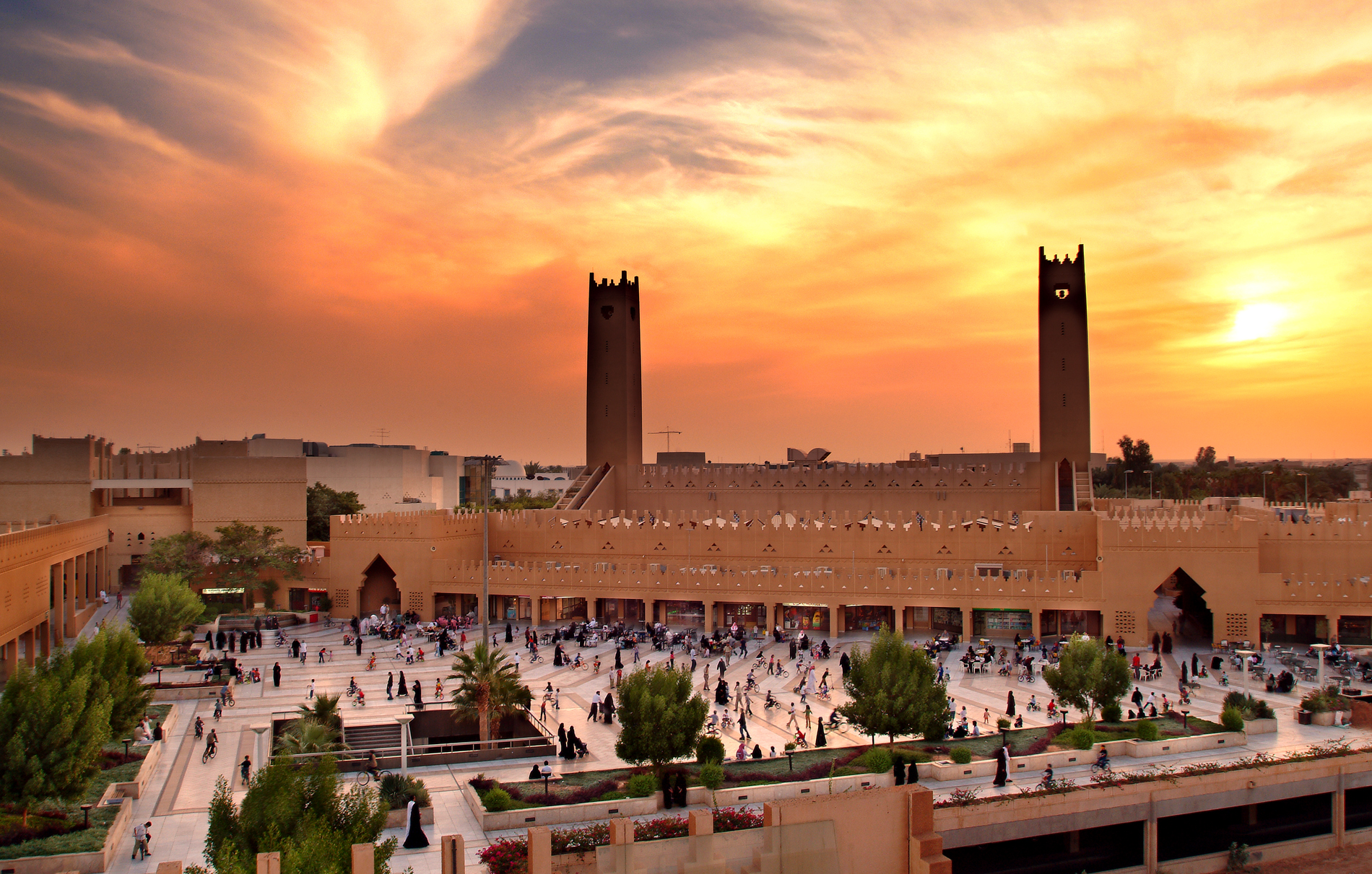
Al Ula
A journey into the past, a trip to Al Ula is always
full of excitement and fun, provides the romance of
traveling through a beautiful desert landscape.
Al Ula is situated northwest of Saudi Arabia. It lies
between a chain of mountains on its eastern and western
sides. It is about 400 km north of Al Madinah. Al Ula
had a biblical named “Dedan’” as mentioned
in the Old Testament and in the Assyrian and Arabic
writings. The city was inhabited by Arab tribes as inscriptions
show. The Lihyanite people were its original settlers.
The Minean were also mentioned, but they constituted
a minority compared to the former, as they essentially
arrived there to participate in the Southern Arabian
trade on its way to the North of Arabia, Levant and
Egypt. The city occupies a strategic position along
the main trade route carrying incense and spices and
connecting civilizations of the old world. It acted
as the medium between the civilizations of India and
Southern Arabia in the South and Mesopotamia, the Levant
and Egypt in the north from early times to the end of
the first century A.D.
Main Attraction
The Old City:
This is a rare example of an Islamic City, which goes
back to the 7th century H/11th A.D. The building material
was reused stone brought from archaeological site, Al
Khuraiba located nearby. Many of the Lihyanite inscribed
stones, alters, stone blocks can be seen today in existing
houses. The houses were lined side by side to form an
outer enclosure wall to protect the city against enemy
attacks.
Museum of Archaeology and Ethnography
The Antiquities department has established the museum
in Sikhairat in Al-Ula. It is open to the visitors in
the morning and in the evening.
Nature in Al Ula
Al Ula is characterized by its attractive natural scenery
marked by the reddish sandstone inselbergs carved by
natural agencies into beautiful and attractive shapes.
Sand dunes and inselbergs combined together to form
a wonderful display of thrilling nature. During winter
and spring, after the rain, the area turns into green
fields attracting the inhabitants and visitors from
outside the region.
Al Mabiyat:
Mabiyat archaeological sites occur at 15 km to the south
of Al Ula near Mugheira village. Its history goes back
to the Umayyad and Abbasid periods. Ruins of buildings,
remains of an irregular wall enclosure and pottery shreds
can be seen on the site area. The Antiquities Department
conducted excavations in 1404-1405 H (1948-1985 A.D.)
and covered the buildings of a large Islamic city. Houses
were built of mud bricks and firebricks with their floors
covered by mud or plaster.
Inscriptions:
Inscriptions and graffiti are widely spread on the sides
and summits of Jabel Al Ula covering the prehistoric
period and ancient civilizations writings: Lihyanite,
Minean, Aramaic, Nabatean as well as Islamic.
Al Khuraiba:
Al Khuraiba is one of the sites attributed
to the Kingdom of Lihyan, which dominated the area during
the period between the 6th and 2nd century B.C. Pottery
shreds of different types and forms are widespread in
the site area.. Stone altars, incense burners, stone
and statues with Lihyanite inscriptions have been found.
Inhabitants in building Al Ula old city reused inscribed
stones and other objects. There is a circular basin
carved in one piece of sandstone rock believed to be
a part of Lihyanite temple. There is also a large number
of tombs, each is a room containing a number f graves
or simply a single shaft for one person. Some of the
tombs have inscription bearing the name of the owner.
One of the most known tombs is Al Usud (the lions),
which is characterized by two lions carved on the side
of the tomb.
Ikmah:
This site is a small Wadi slopping from Jabel Ikmah,
in which telling stones bearing Lihyanite and Minean
inscriptions were discovered. These, together with one
inscription were beautifully executed with signs of
different forms and shape.
Among the natural attractions –
1) King Abdulaziz national Park located in
Al Harra Mountain 700 meters above the city were you’ll
have a bird eye view of Al Ula and Mada’in Saleh.
A steep track, 26 km long, drives you to the top, starting
from the bridge at the end of the road from Hail.
2) The Elephant Rock, 5km south of
the Mada’in Saleh site gate, a natural beauty
produced in the sandstone by the regular sandstorms
over thousand of years.
3) Madakheel and Shiraan Valleys
similar to the Wadi Rum in Jordan.
4) Al Hawiyah Canyon: The depth of
this canyon is almost 400 meters at its deepest.
Mount Ithlib:
Mount Ithlib is situated to the North east
of Al Hijr within a group of two parallel chains of
high rocky peaks separated by a narrow canyon. This
mountain range was of great importance to the Nabateans
and served as a religious center that was the focus
of a number of rituals.
|