
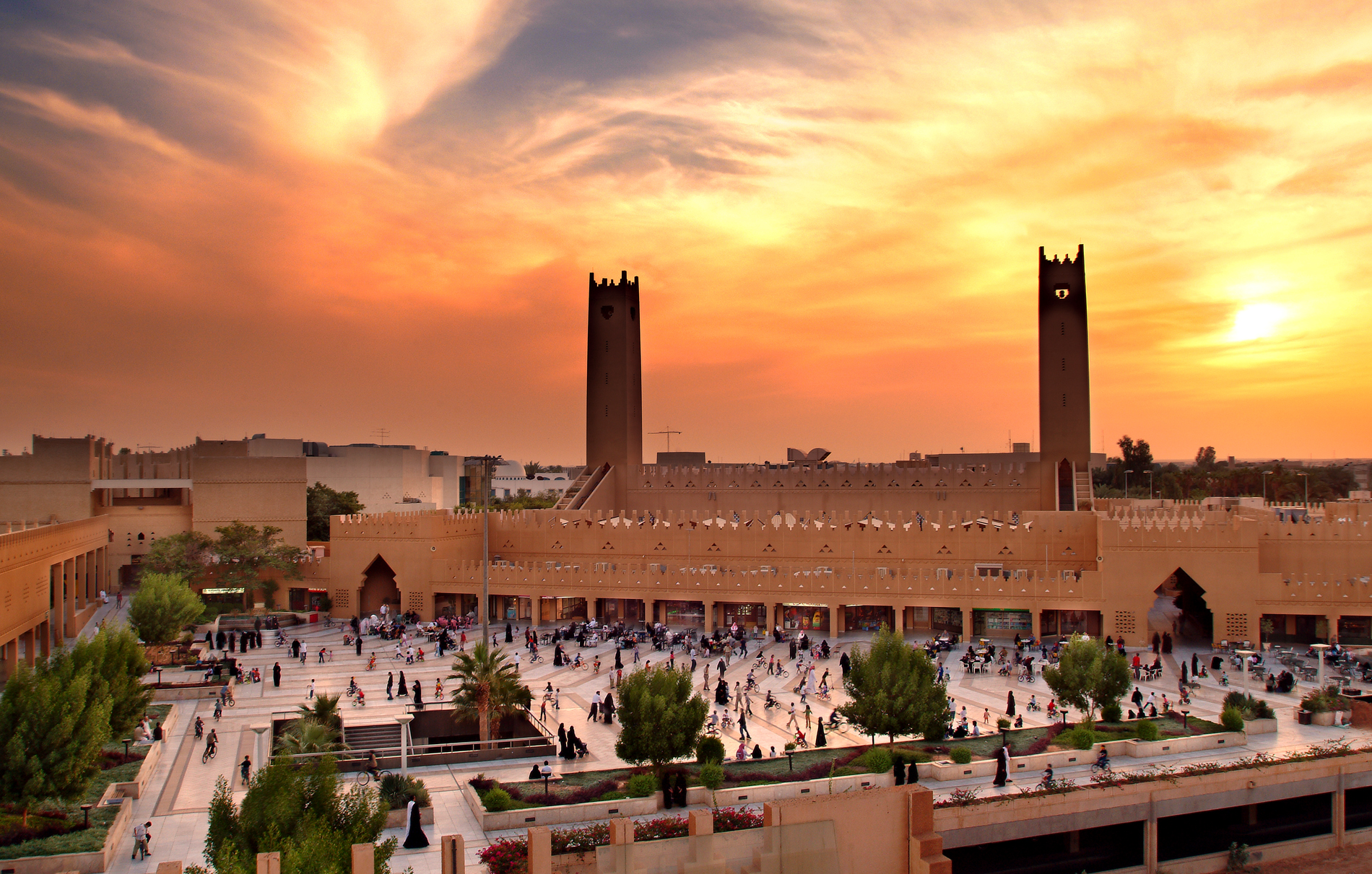
Tabuk
The town of Tabuk is an important gateway in northern
Arabia on the active pilgrimage and caravan trade routes.
Main Attractions
Rock art and inscriptions site in Wadi Dam:
Hundreds of localities with rock art and inscriptions
dating to different chronological periods and ranging
from Paleolithic to the Islamic period were recorded
at Wadi Dam and the region west of Tabuk. Study of the
art revealed rich stylistic variability and both human
and animal figures were represented in it. Tens of sites
in the area with Thamudic Greek and Nabatean inscriptions
have been found.
Qurayah:
It is situated 79 km. North- west of Tabuk. It is an
agricultural settlement dating back to the end of the
2nd millennium B.C. It is located at the end of Wadi
Afal, 220 km From Tabuk. There is found the famous Nabatean
graves cut in the rocks (Mughair Shauib).
Rawafah Temple:
It is situated at some 115 km. South west of Tabuk.
It was built during the Nabatean period 166-167 A.D.)
And dedicated to a Roman Emperor.
Al – Khuraiba:
Its lies at a distance of 290 km. West of Tabuk on the
Red Sea coast, Al-Khuraiba. It was a port on the Red
Sea. It goes back to Nabatean times and it continued
in use until aster the advent of Islam.
Qaal’at Al-Muazzam and Railway Station
No. 27:
Al Muazzam is a major station on the Levatine pilgrimage
road. It has a castle with four stone lined walls and
a square pool (Birkat) still in operational seasonal
rains. Some travelers consider it was the “Pearl
of the Hajj caravanserais”, side-by-side de with
Qaal’at ad Sawra, 200 km. South.
Qaal’at Al-Akhdhar and Railway Station
No. 30:
This is a major station on the Levantine pilgrimage
road and is situated 75 km. South east of Tabuk.
Rock Art and Inscription Site in Wadi Dam:
Hundreds of localities with rock art and inscriptions
dating to different chronological periods and ranging
from Paleolithic to the Islamic period were recorded
at Wadi Dam and the region west of Tabuk. Study of the
art revealed rich stylistic variability and both human
and animal figures were represented in it. Tens of sites
in the area with Thamudic Greek and Nabatean inscriptions
have been found.
Qaal’at Tabuk:
It is also known as the castle of Ashab Al-Ayka whoa
re mentioned in the Holy Quran. The castle dates back
to about 3500 B.C. and has been restored many times;
the last was in 1062 H. (1651 A.D.).
‘Ain Sukkrah:
This is an ancient spring dating to the Pre –
Islamic era. It is said that during the invasion of
Tabuk, Prophet Mohammed (PBUH) camped more than ten
days near the spring and drank from its water.
The Prophet’s (PBUH) Mosque:
It is also known as Repentance Mosque. It was originally
built of mud and roof with palm trunk trees. It was
restored in 1062 H (1652 A.D.) and finally its complete
renewal was ordered by the late King Faisal Ibn Abdul-Aziz
along the pattern of the Prophet’s Mosque in Madinah
Old Hijaz Railway Station in Town No. 36:
It is the third largest station after Madinah and Mada’in
Saleh stations.
Old Hijaz Railroad:
The best sections of this road between Tabuk and Mada’in
Saleh (20 km long) |